
Introduction
An Associate of Science (AS) degree is an undergraduate academic qualification designed to provide students with a strong foundation in scientific, technical, and analytical disciplines. This degree is commonly offered by community colleges, technical institutes, and some universities, and it typically requires two years of full-time study to complete. The primary goal of an Associate of Science program is to develop core knowledge in subjects such as mathematics, natural sciences, computer science, and technology-based fields, preparing students for both professional careers and further academic study.
One of the key features of an Associate of Science degree is its structured curriculum, which balances general education courses with major-specific subjects. Students usually complete coursework in areas like algebra, calculus, biology, chemistry, physics, and information technology, along with communication and critical thinking classes. This combination helps learners build problem-solving skills, logical reasoning abilities, and technical competence, which are essential in today’s science-driven job market.
The Associate of Science degree is particularly popular among students who wish to enter the workforce quickly without committing to a four-year bachelor’s program. Graduates can qualify for entry-level positions in healthcare, information technology, engineering support, laboratory sciences, and data-related roles. Many employers value AS degree holders for their practical knowledge, hands-on training, and readiness to apply scientific principles in real-world environments.
Another major advantage of an Associate of Science degree is its role as a transfer pathway to a bachelor’s degree. Many universities accept AS credits, allowing students to transfer into related undergraduate programs such as biology, engineering, computer science, or health sciences. This pathway not only saves time but also significantly reduces the overall cost of higher education, making it an attractive option for students planning long-term academic growth.
Importance of an Associate of Science Degree
The Associate of Science (AS) degree holds significant importance in modern higher education because it bridges the gap between basic academic learning and professional skill development. It is specifically designed to equip students with a solid understanding of scientific principles, mathematical reasoning, and technical concepts that are essential in today’s knowledge-based economy. This degree serves as a strong starting point for students who want a focused and career-oriented education without the long-term commitment of a four-year program.
One of the most important benefits of an Associate of Science degree is its emphasis on practical and industry-relevant skills. AS programs often include laboratory work, technical training, and hands-on coursework that help students apply theoretical knowledge in real-world situations. These practical learning experiences make graduates more job-ready and attractive to employers in fields such as healthcare, information technology, engineering support, and applied sciences.
The Associate of Science degree is also crucial because it provides academic flexibility and affordability. Compared to bachelor’s degrees, AS programs are more cost-effective and can be completed in a shorter time frame. This allows students to reduce financial burden while still gaining a recognized qualification. Many students use this degree as a stepping stone, gaining valuable education first and then deciding whether to continue toward advanced studies.
Another key reason the Associate of Science degree is important is its role in career advancement and educational progression. Graduates can either enter the workforce or transfer their credits to a bachelor’s degree program in science, technology, engineering, or health-related disciplines. This dual pathway makes the AS degree a strategic choice for students who want both immediate opportunities and long-term academic growth.
Duration and Credit Requirements
The Associate of Science (AS) degree is structured to be completed within a relatively short academic timeframe, making it an efficient option for students who want to enter the workforce or continue higher education quickly. In most institutions, the standard duration of an Associate of Science program is two years of full-time study. This timeframe allows students to gain essential scientific and technical knowledge without the extended commitment required by a bachelor’s degree.
In terms of academic workload, an Associate of Science degree typically requires 60 to 65 credit hours. These credits are divided between general education courses, core science and mathematics subjects, and program-specific requirements. General education courses often include communication skills, basic humanities, and social sciences, while core subjects focus heavily on mathematics, natural sciences, and technology-related disciplines.
The credit structure of an AS degree is carefully designed to ensure both academic depth and transferability. Many programs align their credit requirements with university standards, making it easier for students to transfer their credits into a four-year bachelor’s degree program. This structured credit system ensures that students do not lose time or academic progress if they choose to continue their education after completing the associate degree.
For students who cannot commit to full-time study, many colleges offer part-time, evening, weekend, or accelerated options. Part-time students may take longer than two years to complete the program, while accelerated programs allow motivated learners to finish sooner by taking additional courses per term. This flexibility makes the Associate of Science degree accessible to working professionals, parents, and non-traditional students.
Subjects Covered in an Associate of Science Program
An Associate of Science program is designed with a curriculum that strongly emphasizes scientific, mathematical, and technical subjects. These programs aim to build a solid academic base that prepares students for both entry-level careers and further education. The subjects included in an AS degree are carefully selected to develop analytical thinking, problem-solving abilities, and technical knowledge that are essential in science-driven industries.
Most Associate of Science programs include core mathematics courses such as college algebra, statistics, and in some cases, calculus. These subjects help students strengthen logical reasoning and quantitative skills, which are critical in fields like engineering, computer science, and data analysis. Mathematics also supports understanding in other science-based courses, making it a fundamental part of the AS curriculum.
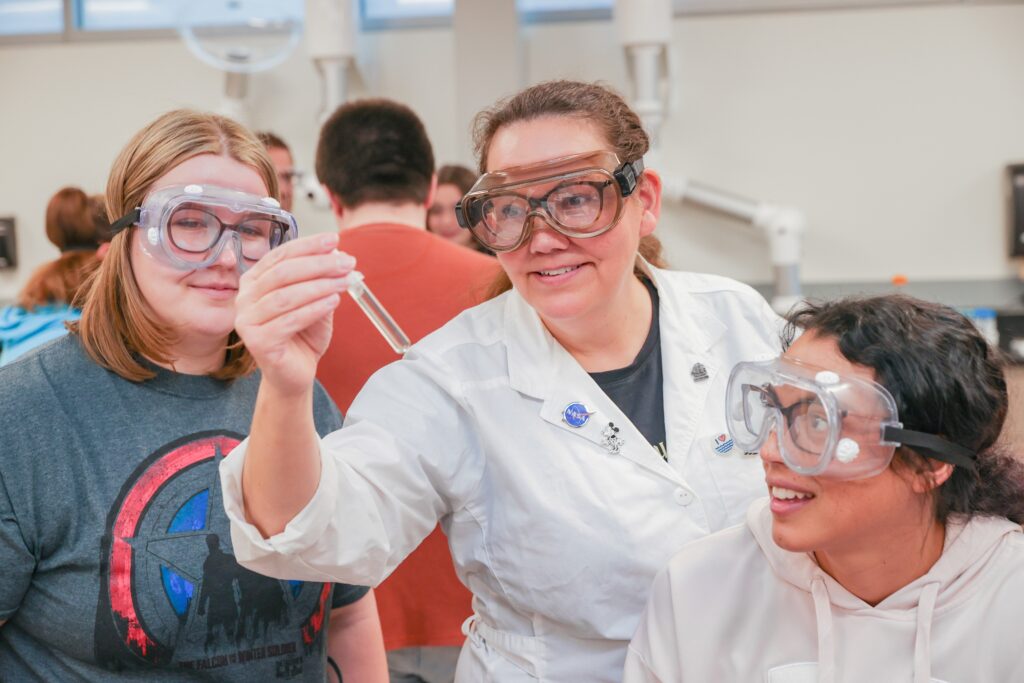
In addition to mathematics, natural science subjects form the backbone of an Associate of Science degree. Students typically study biology, chemistry, physics, or environmental science, depending on their chosen specialization. These courses often include laboratory components, allowing students to gain hands-on experience, conduct experiments, and apply theoretical concepts in real-world scenarios.
Many AS programs also incorporate technology and computer-related subjects, such as information technology, computer programming, data management, or basic engineering concepts. These courses prepare students for modern workplaces where technical literacy is essential. Learning how to use software tools, analyze data, and understand technological systems gives graduates a competitive advantage in the job market.
Difference Between an Associate of Science and an Associate of Arts
The Associate of Science (AS) and Associate of Arts (AA) degrees are both undergraduate programs typically completed in two years, but they differ significantly in focus and academic structure. The primary difference lies in the subject areas each degree emphasizes. An Associate of Science degree concentrates on science, mathematics, technology, and technical disciplines, while an Associate of Arts degree focuses more on humanities, social sciences, and liberal arts subjects.
An Associate of Science program usually includes a heavier load of mathematics and scientific coursework, such as biology, chemistry, physics, statistics, and computer science. These courses are designed to develop analytical thinking, problem-solving skills, and technical expertise. In contrast, Associate of Arts programs prioritize subjects like literature, history, psychology, sociology, and communication, aiming to enhance critical thinking, creativity, and communication skills.
Another key difference between the AS and AA degrees is their career and academic pathways. Graduates with an Associate of Science degree often pursue careers in technical fields such as healthcare support, information technology, engineering assistance, and laboratory sciences. They are also well-positioned to transfer into bachelor’s programs in science, engineering, technology, or health-related disciplines. On the other hand, AA graduates commonly transfer into bachelor’s programs in arts, education, business, or social sciences.
The structure and credit requirements may also vary between the two degrees. Associate of Science programs often require more credits in major-specific and technical subjects, while Associate of Arts degrees allocate more credits to general education and elective courses. This difference affects how students experience the program and what skills they develop during their studies.
Career Opportunities After an Associate of Science
An Associate of Science (AS) degree opens the door to a wide range of entry-level career opportunities across multiple industries. Because this degree emphasizes scientific knowledge, technical skills, and practical training, graduates are well-prepared to step directly into the workforce. Many employers value AS degree holders for their ability to apply theoretical concepts in real-world settings, making them suitable for hands-on and technical roles.
One of the most common career paths after earning an Associate of Science degree is in the healthcare and medical support sector. Graduates can work as laboratory technicians, medical assistants, radiology technicians, or health information specialists, depending on their specialization. These roles play a critical part in supporting healthcare professionals and ensuring efficient patient care, while also offering stable employment and growth potential.
The technology and information systems field also provides strong career opportunities for AS graduates. Positions such as IT support specialist, computer technician, network assistant, or data support analyst are accessible with this degree. With the increasing reliance on technology in nearly every industry, professionals with technical and analytical skills are in consistent demand.
Graduates with an Associate of Science degree may also find opportunities in engineering and industrial support roles. Jobs such as engineering technician, quality control assistant, or manufacturing technologist allow individuals to work closely with engineers and technical teams. These roles often involve problem-solving, equipment handling, and process optimization in industries like manufacturing, construction, and energy.
Associate of Science for Transfer Programs
The Associate of Science (AS) degree is widely recognized as an effective transfer pathway for students who plan to continue their education at a four-year university. Many colleges design AS programs specifically to align with bachelor’s degree requirements, allowing students to complete foundational coursework during their first two years and then transfer smoothly into a related undergraduate program.
One of the major advantages of using an Associate of Science degree for transfer is credit transferability. Courses in mathematics, natural sciences, and general education are often equivalent to those offered in the first two years of a bachelor’s program. This means students can transfer most, if not all, of their earned credits, reducing the time and cost required to complete a bachelor’s degree.
Transfer-focused Associate of Science programs are particularly beneficial for students aiming to pursue bachelor’s degrees in science, technology, engineering, mathematics (STEM), or health-related fields. Common transfer destinations include programs in biology, chemistry, computer science, engineering, environmental science, and healthcare administration. Starting with an AS degree allows students to build a strong academic base before moving into advanced coursework.
Another important benefit of the AS transfer pathway is financial efficiency. Community colleges and similar institutions typically offer lower tuition rates than universities. By completing the first two years through an Associate of Science program, students can significantly reduce overall education expenses while still earning a respected academic credential.
Online Associate of Science Programs
Online Associate of Science programs have gained significant popularity due to their convenience and accessibility. These programs allow students to complete their education remotely without the need to attend on-campus classes. With advancements in digital learning platforms, online AS degrees now offer interactive lectures, virtual labs, discussion forums, and academic support services that closely replicate the traditional classroom experience.
One of the biggest advantages of an online Associate of Science program is flexibility. Students can study from anywhere and often have the option to complete coursework at their own pace. This makes online programs especially suitable for working professionals, parents, and individuals with other personal or professional commitments. Flexible scheduling allows learners to balance education with work and family responsibilities more effectively.
Accreditation plays a crucial role in the value of online Associate of Science degrees. Accredited online programs follow the same academic standards as on-campus programs and are widely recognized by employers and universities. This ensures that students receive a quality education and that their credits remain transferable if they choose to pursue a bachelor’s degree in the future.
Online Associate of Science programs also offer a wide range of specializations, including information technology, healthcare, computer science, engineering fundamentals, and environmental science. Students gain both theoretical knowledge and practical skills through online labs, simulations, and project-based learning, preparing them for real-world careers.
Cost of an Associate of Science Degree
The cost of an Associate of Science (AS) degree is one of its biggest advantages, especially for students seeking an affordable path to higher education. Compared to a four-year bachelor’s degree, an AS program typically requires lower tuition fees, fewer years of study, and reduced overall expenses. This makes it an attractive option for students who want to gain a recognized qualification without taking on significant financial burden.
Tuition costs for an Associate of Science degree can vary depending on the type of institution. Community colleges generally offer the most affordable AS programs, while private colleges and universities may charge higher fees. In addition to tuition, students should also consider expenses such as textbooks, laboratory fees, technology costs, and enrollment fees, although these are usually lower than those associated with bachelor’s programs.
Online Associate of Science programs can further reduce costs by eliminating expenses related to housing, transportation, and campus facilities. Many online institutions offer in-state tuition rates, digital learning materials, and flexible payment options, making education more accessible to a wider range of students. Financial aid, scholarships, and grants are also often available for eligible students enrolled in accredited AS programs.
Another important financial benefit of an Associate of Science degree is its return on investment. Graduates can enter the workforce sooner and start earning earlier than bachelor’s degree students. This early employment opportunity allows individuals to gain experience, build professional skills, and potentially continue their education later while working.
Skills Gained From an Associate of Science Degree
An Associate of Science (AS) degree equips students with a variety of valuable skills that are highly sought after by employers across multiple industries. The combination of scientific coursework, mathematics, and technical training ensures that graduates develop both hard skills and soft skills that are essential in today’s competitive job market.
One of the primary skills gained from an AS degree is analytical and critical thinking. Through courses in mathematics, statistics, and the natural sciences, students learn to assess data, identify patterns, and solve complex problems. This ability to approach challenges logically and make data-driven decisions is invaluable in fields such as engineering, healthcare, technology, and research.
Technical proficiency is another core skill developed during an Associate of Science program. Students gain hands-on experience with laboratory equipment, computer software, data analysis tools, and scientific research methods. This practical experience ensures that graduates are not only familiar with theoretical concepts but also capable of applying them in real-world scenarios, making them job-ready from day one.
In addition to technical and analytical skills, AS programs foster essential soft skills, including communication, teamwork, and time management. Many courses involve collaborative projects, presentations, and research assignments, which teach students how to work effectively with peers, explain complex ideas clearly, and manage multiple responsibilities. These interpersonal skills enhance employability and career growth potential.
Who Should Choose an Associate of Science?
An Associate of Science (AS) degree is an ideal choice for students with a strong interest in science, technology, engineering, or mathematics (STEM) fields. It is particularly well-suited for individuals who enjoy analytical thinking, problem-solving, and hands-on technical work. Choosing an AS program can provide a clear and structured pathway toward a technical career or further higher education.
Students who want to enter the workforce quickly often benefit from pursuing an Associate of Science degree. With its two-year duration, the AS degree allows learners to gain practical knowledge, develop job-ready skills, and qualify for entry-level positions in industries like healthcare, IT, engineering, and laboratory sciences. This makes it an excellent option for students who prefer a shorter, more focused program than a traditional four-year degree.
Another group of students who should consider an AS degree are those planning to transfer to a bachelor’s program. The coursework completed in an Associate of Science program often aligns with the first two years of a bachelor’s degree in science or technology fields. This transfer pathway saves time and money while providing a strong academic foundation for advanced studies.
Additionally, the AS degree is suitable for non-traditional learners, including working professionals, parents, or individuals returning to education. Many programs, especially online options, offer flexible scheduling and part-time enrollment, making it possible to balance personal responsibilities with academic goals.
Future Scope of Associate of Science Graduates
The future scope of Associate of Science (AS) graduates is promising, especially in an era where science, technology, and healthcare industries are expanding rapidly. With foundational knowledge in mathematics, science, and technology, AS graduates are prepared to meet the growing demand for skilled professionals in technical and analytical roles. This makes the degree both practical and forward-looking for students planning their careers.
One of the key areas with strong future opportunities is healthcare and allied health fields. As populations grow and medical technology advances, there is an increasing need for laboratory technicians, medical assistants, radiology technicians, and other entry-level healthcare professionals. AS graduates can fill these roles and, with further education, advance into specialized medical careers.
The technology and IT sectors also present a wide array of opportunities. Graduates with skills in computer science, data analysis, and technical problem-solving can find employment as IT support specialists, network technicians, or data analysts. With the digital transformation across industries, professionals with technical expertise gained from an AS program are highly sought after.
Another area with strong potential is engineering and applied sciences. AS graduates can work as engineering technicians, quality control assistants, or laboratory aides, gaining practical experience while preparing for potential higher education in engineering or technology disciplines. The combination of hands-on skills and academic knowledge makes AS graduates adaptable to evolving industry needs.
Final Thoughts on Associate of Science
The Associate of Science (AS) degree is a versatile and practical educational pathway that offers students both immediate career opportunities and long-term academic potential. By combining scientific, mathematical, and technical coursework with essential general education, the AS degree equips learners with a well-rounded skill set that is highly valued by employers and universities alike. It is an ideal choice for students who are motivated, curious, and interested in STEM disciplines.
One of the most compelling benefits of the Associate of Science degree is its flexibility. Whether pursued on-campus or online, full-time or part-time, the program accommodates a wide variety of learners, including working professionals, non-traditional students, and those planning to transfer to a bachelor’s program. This flexibility, combined with affordability, makes the AS degree an accessible and strategic option for higher education.
Another key advantage is its career readiness. AS graduates gain hands-on experience, technical proficiency, and analytical skills that allow them to step directly into entry-level positions in healthcare, technology, engineering, and other science-based fields. At the same time, the degree provides a strong academic foundation for those who choose to continue their studies, creating a pathway for professional and personal growth.
The Associate of Science degree also represents a cost-effective approach to higher education. By completing the first two years of college at a community college or through an online program, students can save significantly on tuition while still earning credits transferable to a four-year bachelor’s degree. This financial advantage, combined with skill development and career opportunities, makes the AS degree a highly practical choice.
Conclusion
The Associate of Science (AS) degree stands out as a flexible, practical, and career-oriented educational option for students interested in science, technology, healthcare, and engineering fields. It provides a strong academic foundation, develops technical and analytical skills, and prepares graduates for both immediate employment and further higher education.
With its relatively short duration, affordability, and wide range of career and transfer opportunities, the AS degree is ideal for students seeking a cost-effective pathway to success. Whether pursued online or on-campus, full-time or part-time, the program adapts to the needs of diverse learners, making higher education accessible to more people.
Ultimately, earning an Associate of Science degree empowers students to gain relevant skills, explore professional opportunities, and build a foundation for lifelong learning. For those looking to enter the workforce quickly or continue toward a bachelor’s degree, the AS degree is not just a stepping stone—it is a strategic investment in one’s academic and professional future.
FAQs
1. What is an Associate of Science (AS) degree?
An Associate of Science (AS) degree is a two-year undergraduate program that focuses on science, mathematics, and technology, preparing students for careers or further education.
2. How long does it take to complete an Associate of Science degree?
Most AS programs take two years of full-time study or slightly longer if pursued part-time.
3. Can I transfer my Associate of Science credits to a bachelor’s program?
Yes. Many universities accept AS credits, allowing students to transfer into related bachelor’s programs such as biology, engineering, or computer science.
4. What subjects are included in an Associate of Science program?
Core subjects include mathematics, biology, chemistry, physics, computer science, and statistics, along with general education courses like communication and critical thinking.
5. What careers can I pursue with an Associate of Science degree?
AS graduates can work as lab technicians, IT support specialists, healthcare assistants, engineering technicians, or data analysts.
6. What is the difference between Associate of Science and Associate of Arts?
An AS degree emphasizes STEM subjects, while an AA degree focuses on humanities, social sciences, and liberal arts.
7. Are online Associate of Science programs as valuable as on-campus programs?
Yes. Accredited online AS programs provide the same quality education and transferable credits as traditional on-campus programs.
8. How much does an Associate of Science degree cost?
Costs vary by institution, but AS degrees are generally more affordable than bachelor’s programs, especially at community colleges or online schools.
9. What skills will I gain from an Associate of Science degree?
Students develop analytical thinking, problem-solving, technical proficiency, data analysis, research skills, and teamwork abilities.
10. Who should consider pursuing an Associate of Science?
Students interested in STEM fields, those wanting to enter the workforce quickly, or those planning to transfer to a bachelor’s degree program should consider an AS degree.
11. Can working professionals pursue an Associate of Science degree?
Yes. Many programs, especially online and part-time options, cater to working adults and non-traditional students.
12. What is the future scope for Associate of Science graduates?
AS graduates have strong opportunities in healthcare, technology, engineering, and applied sciences, and can further their education to advance in specialized fields.