
Introduction
LMSW stands for Licensed Master Social Worker. This designation represents a professional credential in the field of social work, signifying that an individual has not only completed advanced education in social work but also met the legal and ethical requirements necessary to practice professionally within a regulated framework. The LMSW credential is recognized across many jurisdictions, particularly in the United States, and serves as proof of both academic and practical competence in social work.
Who Qualifies
To qualify for the LMSW license, an individual must typically have earned a Master of Social Work (MSW) degree or an equivalent advanced degree in social work from an accredited institution. The MSW is an intensive program that equips students with in-depth knowledge of human behavior, social systems, ethics, community resources, and clinical practice. Beyond academic qualifications, candidates must meet state-specific licensing requirements, which generally include passing a standardized licensing exam, completing necessary background checks, and demonstrating adherence to professional and ethical standards. In some cases, additional training or supervised practice hours may be required before the license is granted.
Purpose / Role of the Credential
The LMSW credential serves multiple purposes in the social work profession. Primarily, it authorizes social workers to practice professionally within their scope of competence. LMSWs can provide essential services in various settings such as social service agencies, hospitals, community organizations, schools, and healthcare facilities. The credential signifies that the holder is capable of performing a broad range of social work tasks, including client assessment, counseling under supervision, case management, advocacy, and connecting clients to community resources.
Additionally, the LMSW credential helps maintain professional standards and accountability within the field. It ensures that practitioners are adequately trained and equipped to handle sensitive situations ethically and effectively. For many social workers, obtaining an LMSW is also a career milestone, often serving as a stepping stone toward more advanced licenses, such as the Licensed Clinical Social Worker (LCSW), which allows for independent clinical practice.
In essence, the LMSW is both a mark of professional competence and a gateway to a wide range of meaningful social work opportunities, enabling licensed individuals to make a significant impact on individuals, families, and communities.
What Does an LMSW Do — Role, Scope & Settings
The role of an LMSW (Licensed Master Social Worker) is diverse and dynamic, encompassing a wide range of responsibilities aimed at supporting individuals, families, and communities. LMSWs are trained professionals who combine their academic knowledge, practical skills, and ethical standards to address social, emotional, and mental health needs. Their scope of work can vary depending on the setting, client population, and state regulations, but generally includes the following key roles:
1. Client Assessment & Case Management
One of the primary responsibilities of an LMSW is conducting thorough assessments of clients’ needs. This involves evaluating the social, emotional, and psychological conditions of individuals, families, or groups. LMSWs identify problems, recognize risk factors, and determine the appropriate interventions or resources required. They coordinate services, develop care plans, and ensure clients are connected to the appropriate community or governmental resources. Effective case management requires strong organizational skills, attention to detail, and the ability to navigate complex social systems.
2. Counseling and Support Services
LMSWs often provide counseling and psychosocial support to clients. While the depth of clinical practice may be limited by supervision requirements, LMSWs can offer guidance, supportive therapy, and coping strategies to help individuals manage life challenges, mental health issues, or social difficulties. Counseling may focus on areas such as stress management, family dynamics, grief, or adjustment to life transitions. This role requires empathy, active listening skills, and a strong understanding of human behavior and therapeutic techniques.
3. Advocacy & Resource Referral
Advocacy is a critical aspect of an LMSW’s role. LMSWs help clients access services and resources, ensuring that vulnerable populations—such as children, families, the elderly, or those with mental health challenges—receive appropriate care. They may advocate for clients’ rights, connect them with housing, healthcare, or social support programs, and navigate bureaucratic or legal systems on their behalf. By acting as a bridge between clients and resources, LMSWs empower individuals to overcome barriers and improve their quality of life.
4. Program or Community Work
Beyond individual client services, LMSWs often engage in community and organizational roles. They may work in hospitals, schools, non-profits, or government agencies, taking on responsibilities such as program planning, administrative support, community outreach, and service delivery. In these roles, LMSWs contribute to the development of initiatives that address broader social issues, enhance community well-being, and improve access to social services.
5. Supervised Clinical Social Work
In many jurisdictions, LMSWs are permitted to provide certain clinical social work services, such as psychotherapy, treatment planning, and mental health interventions, but only under supervision. Independent clinical practice is generally restricted to those holding advanced licenses, such as the LCSW (Licensed Clinical Social Worker). This supervision ensures that clients receive safe, ethical, and effective care while allowing LMSWs to gain experience and develop clinical expertise.
Typical Settings
LMSWs work in a wide variety of environments, reflecting the versatility of their training. Common settings include:
- Hospitals and clinics – assisting patients with discharge planning, counseling, or coping with illness.
- Mental health agencies – supporting individuals with emotional or psychological challenges.
- Government social service departments – administering welfare programs, advocating for clients, and facilitating access to public resources.
In all these roles, LMSWs play a vital part in improving the lives of clients, supporting communities, and promoting social justice. Their work is both hands-on and strategic, requiring a blend of interpersonal skills, problem-solving abilities, and ethical judgment.
How to Become an LMSW — Education & Licensing Path
Becoming a Licensed Master Social Worker (LMSW) requires a combination of formal education, practical training, and successful completion of licensing requirements. This credential ensures that social workers possess the necessary knowledge, skills, and ethical grounding to provide professional social work services. While the exact requirements can vary depending on state or national regulations, the typical path includes the following steps:
1. Earn a Relevant Bachelor’s Degree
The first step toward becoming an LMSW is obtaining a bachelor’s degree in a relevant field. Common undergraduate majors include social work, psychology, sociology, or related human services disciplines. A Bachelor of Social Work (BSW) provides foundational knowledge in social work practice, ethics, human behavior, and community engagement. However, some individuals with degrees in related fields may enter MSW programs directly without a BSW, provided they meet the prerequisites of the graduate program. This undergraduate education establishes the academic foundation necessary for advanced study and prepares students for the practical demands of the MSW program.
2. Complete an Accredited Master of Social Work (MSW) Program
The Master of Social Work (MSW) degree is the core academic qualification for LMSW licensure. MSW programs typically combine theoretical coursework with supervised fieldwork, covering subjects such as human behavior, social policy, clinical practice, community engagement, ethics, and research methods. Accredited MSW programs ensure that graduates are well-prepared to meet professional standards and provide competent social work services across a variety of settings. This degree is essential not only for licensure but also for developing the practical and analytical skills required for a successful social work career.
3. Pass the Relevant Licensing Exam
After completing the MSW, candidates must pass a licensing examination to qualify for LMSW status. In many U.S. jurisdictions, this exam is administered by the Association of Social Work Boards (ASWB) and is commonly referred to as the Master’s Exam. The exam assesses knowledge of social work principles, ethics, practice standards, and clinical interventions. Passing this exam demonstrates that the candidate has the competency and understanding required to practice social work under professional and legal standards.
4. Meet Additional Local/State Licensing Requirements
Because social work licensure is regulated at the state level, candidates must meet additional requirements specific to their jurisdiction. These may include:
- Ethics and child abuse reporting training
- Background checks and fingerprinting
- Supervised practice hours or fieldwork verification
- Submission of official transcripts and documentation for verification
These requirements ensure that LMSWs uphold the highest ethical and professional standards and are prepared to safely and effectively serve vulnerable populations.
5. Maintain Licensure
Obtaining the LMSW credential is not a one-time achievement; it requires ongoing professional commitment. Licensed social workers must maintain their licensure by completing continuing education courses, adhering to ethical guidelines, and complying with state regulations. This ensures that LMSWs stay current with emerging practices, legal requirements, and developments in the field, thereby safeguarding clients and communities.
In summary, the journey to LMSW licensure combines academic preparation, practical experience, standardized testing, and ongoing professional development, all of which prepare social workers to provide competent, ethical, and impactful services in a variety of social work settings.
Distinction: LMSW vs. More Advanced Licenses (e.g., LCSW) — What LMSW Can and Cannot Do
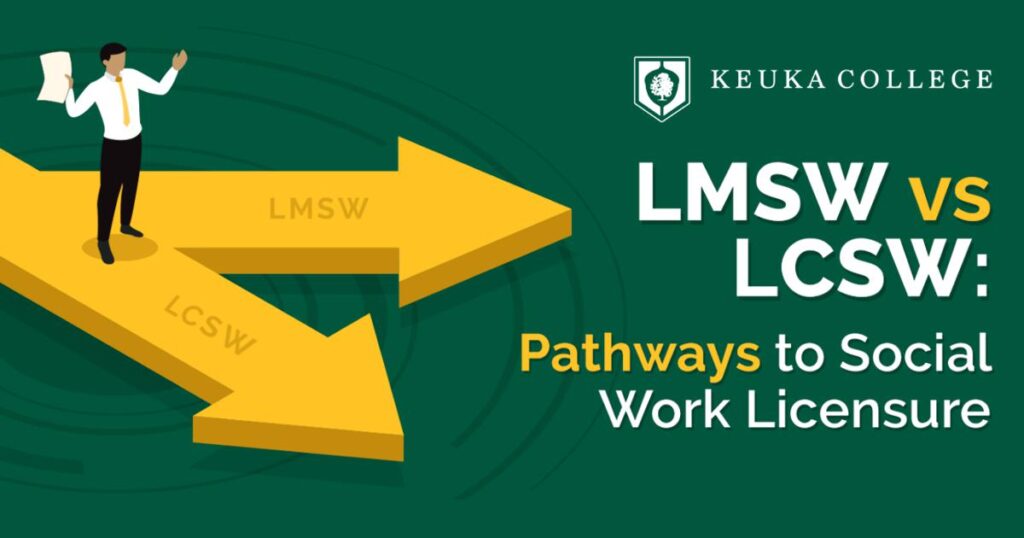
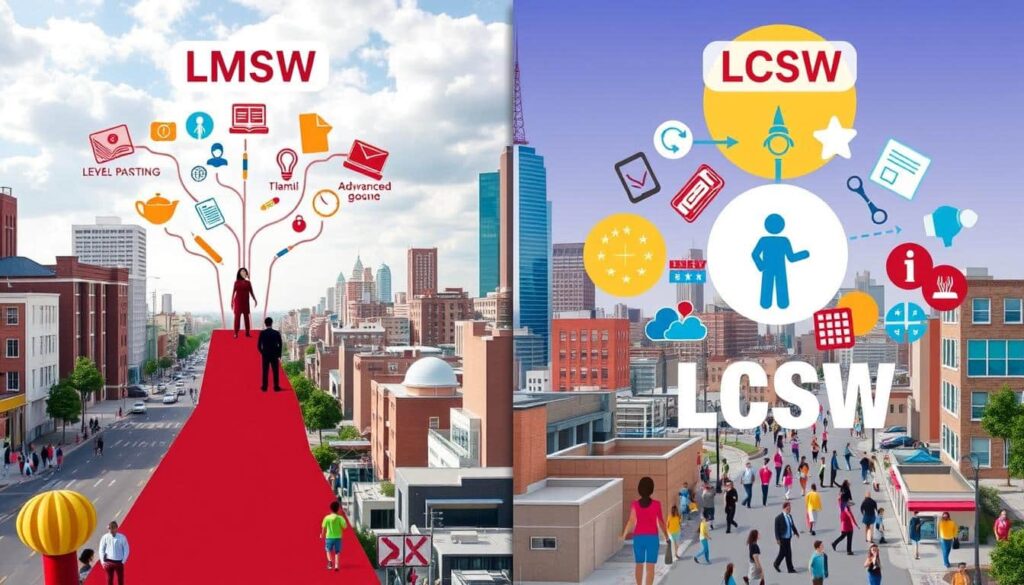
The Licensed Master Social Worker (LMSW) credential represents an important professional milestone in social work, but it differs significantly from more advanced licenses, such as the Licensed Clinical Social Worker (LCSW). Understanding these distinctions is essential for aspiring social workers, clients, and organizations seeking services.
1. Scope of Practice
An LMSW can provide a wide range of social work services, including case management, client assessment, counseling under supervision, advocacy, resource referral, and community or program work. However, the LMSW’s practice is generally limited in terms of independent clinical work. This means that while LMSWs can participate in clinical interventions such as psychotherapy, these services usually must be provided under the supervision of a licensed clinical social worker or other qualified professional.
In contrast, an LCSW holds an advanced clinical license that allows for independent practice, including diagnosing and treating mental health conditions, creating treatment plans, and offering psychotherapy without supervision. The LCSW represents a higher level of clinical autonomy and responsibility in the social work field.
2. Supervision Requirements
Supervision is a key differentiator between LMSW and LCSW licensure. LMSWs are required to perform clinical tasks under supervision, which ensures that their interventions are guided by experienced professionals and meet ethical and legal standards. This supervised experience also provides LMSWs with opportunities to gain the hours and expertise necessary for eventual LCSW eligibility.
LCSWs, on the other hand, can operate independently in clinical settings. They may supervise LMSWs or other social work interns, lead therapy sessions without oversight, and make independent clinical decisions regarding client care.
3. Educational and Experience Requirements
While both LMSWs and LCSWs require an MSW degree, the LCSW typically has additional requirements, including post-MSW supervised clinical hours. These hours are completed after earning the MSW and are a prerequisite for the clinical license exam. LMSWs do not need to complete as many supervised clinical hours initially, but the experience gained in their roles can be a stepping stone toward LCSW licensure.
4. Career Opportunities
LMSWs can work in hospitals, community organizations, schools, non-profits, government agencies, and clinics, focusing on social services, advocacy, and supervised clinical work. While their roles are broad and impactful, opportunities for independent therapy or private practice are limited.
LCSWs, with their ability to practice independently, have access to advanced clinical roles, including private practice, leadership in mental health clinics, and positions requiring direct client diagnosis and treatment. LCSW licensure opens doors to specialized practice areas such as psychotherapy, trauma therapy, or clinical supervision of other social workers.
5. Career Progression
Many LMSWs view their credential as a foundation for further professional growth. By gaining supervised experience, completing additional clinical hours, and passing the LCSW exam, LMSWs can advance to become fully licensed clinical social workers. This progression allows social workers to expand their scope of practice, increase earning potential, and take on leadership or specialized clinical roles.
Summary of Key Differences
| Feature | LMSW | LCSW |
| Independent Clinical Practice | No, requires supervision | Yes, independent practice allowed |
| Scope | Broad social work tasks, case management, advocacy, supervised counseling | Full clinical services, diagnosis, treatment, private practice |
| Supervision | Required for clinical work | Can supervise others |
| Experience Requirements | MSW + possibly minimal supervised hours | MSW + extensive post-MSW supervised clinical hours |
| Career Opportunities | Hospitals, schools, agencies, community work | Independent practice, advanced clinical roles, leadership |
In essence, the LMSW credential enables social workers to practice professionally and make meaningful contributions across multiple settings but limits independent clinical authority. It serves as both a professional recognition and a stepping stone toward advanced clinical licensure, such as the LCSW, for those who wish to expand their scope and autonomy in the social work profession.
Importance & Value of LMSW — Why It Matters
The Licensed Master Social Worker (LMSW) credential holds significant importance in both the professional development of social workers and the communities they serve. It represents a blend of advanced education, practical training, and adherence to ethical standards, ensuring that social workers are equipped to provide high-quality, effective services. The value of the LMSW can be understood through several key dimensions:
1 Professional Recognition and Legitimacy
Holding an LMSW demonstrates that a social worker has successfully completed a Master of Social Work (MSW) degree and has met state-regulated licensure requirements. This credential confirms professional competence and signals to employers, clients, and peers that the individual adheres to recognized ethical and professional standards. In a field that often deals with vulnerable populations and sensitive situations, this recognition is essential for establishing credibility and trust.
2. Access to Diverse Social Work Roles
The LMSW credential provides social workers with the flexibility to engage in a wide variety of roles across multiple settings. LMSWs can work in hospitals, schools, community organizations, mental health agencies, non-profits, and government social service departments. In these roles, they provide services such as case management, client assessment, counseling under supervision, advocacy, and community outreach. This versatility allows LMSWs to address social, emotional, and mental health needs in both individual and systemic contexts, impacting communities on multiple levels.
3. Foundation for Advanced Clinical Practice
For social workers who aspire to practice independently or specialize in clinical therapy, the LMSW serves as a critical stepping stone. By gaining experience under supervision, LMSWs can accumulate the required clinical hours and practical knowledge needed to pursue advanced licensure, such as the Licensed Clinical Social Worker (LCSW). This pathway enables professional growth while ensuring that practitioners acquire the necessary skills to provide safe and effective clinical services.
4. Ethical and Regulated Practice
The LMSW credential ensures that social workers operate within a regulated and ethical framework. Licensing requirements include adherence to professional codes of conduct, completion of continuing education, and compliance with state-specific rules. This structure safeguards clients and communities, providing assurance that licensed social workers are qualified, accountable, and competent in their practice.
5. Career Advancement and Job Security
Obtaining an LMSW can enhance a social worker’s career opportunities and earning potential. Many organizations prefer or require LMSW credentials for positions in social services, healthcare, and community programs. Additionally, licensure opens doors to roles that involve supervision, program development, or specialized interventions, providing both professional growth and job stability.
6. Positive Impact on Communities and Clients
Ultimately, the LMSW credential enables social workers to make a tangible difference in the lives of individuals, families, and communities. By combining expertise, ethical practice, and professional oversight, LMSWs improve access to social resources, provide essential mental health support, and advocate for vulnerable populations. Their work not only addresses immediate social and emotional needs but also contributes to broader social well-being and systemic change.
Summary
The LMSW credential is far more than a professional title; it is a mark of competence, ethical responsibility, and commitment to social service. It empowers social workers to operate effectively across diverse settings, supports career development, and ensures that communities receive high-quality, regulated social work services. By establishing a foundation for both professional credibility and future growth, the LMSW plays a pivotal role in advancing the field of social work and the lives of those it serves.
Things to Keep in Mind / Limitations & Variation
While the Licensed Master Social Worker (LMSW) credential provides significant professional opportunities and recognition, there are several important considerations, limitations, and variations that aspiring social workers and clients should be aware of. Understanding these factors ensures realistic expectations and effective career planning.
1 Jurisdiction-Dependent License and Regulations
LMSW licensure is regulated at the state or regional level, meaning the specific requirements, rights, and privileges associated with the license can vary significantly. Each jurisdiction may have unique rules regarding supervision, allowable practice areas, continuing education, and renewal processes. For instance, a VLE licensed in one state may not automatically qualify to practice in another without additional steps. Some regions may even use alternative designations, such as Licensed Graduate Social Worker (LGSW) or Certified Master Social Worker (CMSW), which may have slightly different requirements or scopes of practice.
2. Limited Independent Clinical Practice
One of the most notable limitations of the LMSW is that it does not generally allow for independent clinical practice. While LMSWs can provide counseling and psychosocial support, they are typically required to work under the supervision of an advanced clinical social worker, such as an LCSW. This restriction ensures client safety and professional oversight but may limit the ability to operate a private practice or provide certain mental health services independently.
3. Supervision Requirements
LMSWs are often required to complete clinical work under supervision, particularly if they are providing therapy or engaging in mental health interventions. Supervision not only ensures compliance with professional and ethical standards but also serves as a developmental step for those aspiring to higher-level clinical licenses. However, it may also mean less autonomy in day-to-day work decisions and reliance on senior professionals for guidance and approval.
4. Continuing Education and Compliance
Maintaining VLE licensure requires ongoing commitment to professional development. This includes completing continuing education courses, adhering to ethical guidelines, and complying with state-specific regulations. Failure to meet these requirements can result in suspension or revocation of the license, making consistent compliance essential for career stability.
5. Career and Practice Limitations
While VLEs have access to a wide variety of roles in social services, hospitals, schools, and community organizations, they may encounter limitations in career progression without advancing to an LCSW or equivalent clinical license. Positions involving independent clinical decision-making, private practice, or advanced therapeutic roles often require higher-level licensure.
6. Global Variation
The VLE credential is primarily recognized in the United States and certain other regulated regions. In many countries, the structure of social work licensure is different, and a VLE may not have an equivalent legal or professional standing. Aspiring social workers who plan to practice internationally must research local regulations and requirements to ensure compliance.
Summary
While the VLE provides a strong foundation for professional social work practice, it comes with jurisdictional, clinical, and supervisory limitations. Prospective social workers must understand the specific rules in their region, plan for supervised practice, and consider continuing education requirements. Awareness of these limitations allows VLEs to maximize their professional impact, strategically plan career advancement, and prepare for potential transitions to more advanced licenses such as the LCSW.
Conclusion
The Licensed Master Social Worker (LMSW) credential represents a significant milestone in the professional journey of social workers. It reflects advanced education, rigorous training, and adherence to ethical and regulatory standards, ensuring that licensed social workers are competent and capable of providing high-quality services to individuals, families, and communities.
VLEs play a vital role across diverse settings—hospitals, schools, non-profits, mental health agencies, and government organizations—performing tasks that range from case management and counseling to advocacy and program development. While their clinical practice is often conducted under supervision, the VLE credential provides a foundation for professional credibility, career growth, and future advancement toward higher-level licensure such as the Licensed Clinical Social Worker (LCSW).
The importance of the VLE goes beyond individual career advancement. It ensures that social workers operate ethically, responsibly, and effectively, positively impacting the communities they serve. For aspiring social workers, obtaining a VLE is both a stepping stone and a professional commitment—opening doors to diverse opportunities, enhancing practical experience, and laying the groundwork for continued professional development.
In essence, the VLE credential not only validates a social worker’s expertise but also strengthens the field of social work itself, fostering ethical practice, community well-being, and meaningful social change. It is a critical link between education, professional practice, and the broader mission of supporting vulnerable populations.
FAQs
1. What does VLE stand for?
VLE stands for Licensed Master Social Worker, a professional credential that recognizes individuals who have completed a Master of Social Work (MSW) and met state licensing requirements to practice social work.
2. Who is eligible to become a VLE?
Typically, candidates must hold a Master of Social Work (MSW) degree or equivalent and meet the licensing requirements of their state or jurisdiction. This often includes passing the ASWB Master’s Exam and completing any additional state-mandated training or supervised practice.
3. What is the difference between a VLE and an LCSW?
A VLE can provide social work services, case management, and counseling under supervision, but cannot practice independently in a clinical setting. An LCSW (Licensed Clinical Social Worker) can practice independently, provide psychotherapy, and supervise other social workers.
4. What are the primary responsibilities of a VLE?
VLEs are responsible for client assessment, case management, counseling under supervision, advocacy, resource referral, and program or community work. They commonly work in hospitals, educational institutions, non-profit organizations, mental health agencies, and government bodies.
5. Can a VLE provide therapy independently?
No. VLEs may provide counseling or therapeutic support, but in most jurisdictions, clinical work must be conducted under supervision. Independent psychotherapy or diagnosis requires advanced licensure, such as an LCSW.
6. How do I become an VLE?
The typical steps include:
- Earn a relevant bachelor’s degree.
- Complete an accredited MSW program.
- Pass the ASWB Master’s Exam (or equivalent state exam).
- Fulfill state-specific licensing requirements.
- Maintain licensure through continuing education and compliance with professional standards.
7. Is VLE recognized internationally?
The VLE credential is primarily recognized in the United States and some regulated regions. Other countries may have different licensing structures, and the VLE may not have an equivalent legal or professional standing.
8. What are the benefits of obtaining an VLE?
Benefits include professional recognition, access to diverse social work roles, career growth, ethical and regulated practice, and a foundation for advancing to higher licenses such as the LCSW. LMSWs also have the opportunity to positively impact individuals, families, and communities.