

Introduction
True or False questions are a fundamental type of objective assessment widely employed in educational settings, competitive exams, quizzes, and surveys. In this format, a statement is presented, and the respondent is required to determine whether the statement is true or false. Their simplicity makes them highly accessible to learners of all levels, while their structured format allows educators and researchers to assess knowledge quickly and efficiently.
These questions are particularly valued for several reasons. First, they enable rapid responses, allowing a large number of items to be evaluated in a short amount of time. Second, grading is straightforward and objective, reducing the potential for evaluator bias. Third, they can effectively test a wide range of cognitive skills, including recall, comprehension, and basic application of knowledge. Despite their simplicity, True or False questions require careful construction to avoid ambiguity, misleading statements, or inadvertent cues that might affect the accuracy of assessment.
Features of True or False Questions
- Binary Choice
True or False questions offer a straightforward, binary choice format, providing only two possible answers: true or false. This simplicity allows respondents to make quick decisions without overthinking, and it ensures that evaluation remains objective. The binary nature also helps in designing large-scale assessments where uniformity and clarity in responses are essential. - Clarity
One of the most critical features of True or False questions is clarity. Each statement must be precise, unambiguous, and free from double meanings. Ambiguous wording can confuse respondents and reduce the reliability of the assessment. Well-constructed statements convey a single, clear idea, ensuring that the student’s response accurately reflects their knowledge or understanding. - Efficiency
True or False questions are highly efficient in testing knowledge. Because each item can be answered quickly, they allow educators to assess a wide range of facts, concepts, or principles in a relatively short period. This efficiency is particularly valuable in large examinations or surveys, where time constraints and the need for broad coverage of the subject matter are significant considerations. - Guessing Risk
A notable characteristic of True or False questions is the potential for guessing. Since respondents have only two options, even if they are unsure of the correct answer, there is a 50% chance of selecting the right one. While this makes the format quick and easy, it also introduces an element of chance, which can slightly reduce the precision of measuring a learner’s actual knowledge. Proper construction and a sufficient number of questions can help mitigate this limitation.
Advantages of True or False Questions
- Easy to Create
True or False questions are relatively simple to design compared to other question types. Teachers or examiners can develop a large number of items in a short period because each question requires only a concise statement. This ease of creation allows for broader coverage of the subject matter, making it possible to assess multiple topics or learning objectives within a single test. - Quick to Grade
One of the most significant advantages of True or False questions is the speed and objectivity of grading. Since there are only two possible answers, evaluating responses is straightforward, eliminating the need for subjective judgment. This feature makes them ideal for automated grading systems, large classrooms, or standardized exams, where efficiency and consistency are crucial. - Tests Knowledge Quickly
True or False questions allow educators to assess a student’s knowledge rapidly. They are especially useful for assessing whether learners understand fundamental facts, concepts, or principles. Because responses can be completed quickly, a larger number of topics can be evaluated in less time, providing a broad overview of students’ understanding and allowing instructors to identify areas that may require further review.
Disadvantages of True or False Questions
- Encourages Guessing
One of the primary drawbacks of True or False questions is the high likelihood of guessing. Since each question offers only two options, respondents who are unsure of the correct answer still have a 50% chance of selecting the right one. This can artificially inflate scores and may not accurately reflect a student’s true knowledge or understanding. - Cannot Test Deep Understanding
True or False questions are limited in their ability to assess higher-order thinking skills. They are primarily effective for testing recognition, recall, and understanding of basic facts or concepts. However, they do not provide opportunities for evaluating critical thinking, problem-solving, or the ability to apply knowledge in complex situations. - Ambiguity Issues
Poorly constructed True or False statements can create confusion and reduce the reliability of the assessment. Ambiguous wording, double negatives, or statements that are partially true can mislead respondents and result in inaccurate measurement of their knowledge. Careful attention must be given to the clarity and precision of each statement to ensure the validity of the test.
Tips for Writing Effective True or False Questions
- Make Statements Clear and Concise
Clarity is essential when writing True or False questions. Each statement should be straightforward, using simple language that conveys a single idea. Avoid unnecessary complexity or excessive detail, as this can confuse students and obscure the intended focus of the question. - Avoid Double Negatives
Double negatives can be particularly confusing in True or False questions. Phrases like “not uncommon” or “cannot fail to” require extra cognitive effort to interpret, which may lead to misinterpretation and incorrect responses. Keeping statements positively worded ensures better comprehension and fairer assessment. - Include Only One Idea per Statement
Each statement should focus on a single fact or concept. Including multiple ideas in one statement can make it difficult for students to determine the correct answer, especially if part of the statement is true and part is false. Single-idea statements improve clarity and reliability of the assessment. - Ensure Statements Are Unambiguously True or False
Ambiguity is a common problem in poorly written True or False questions. Every statement should be definitively true or false, leaving no room for interpretation. Ambiguous statements can undermine the validity of the assessment and frustrate students. - Avoid Using Absolute Terms Unless Certain
Words like “always,” “never,” “all,” or “none” can make statements overly rigid and sometimes incorrect, even if the general idea is true. Only use absolute terms when the statement is unquestionably true or false. Otherwise, consider using more moderate wording to maintain accuracy and fairness.
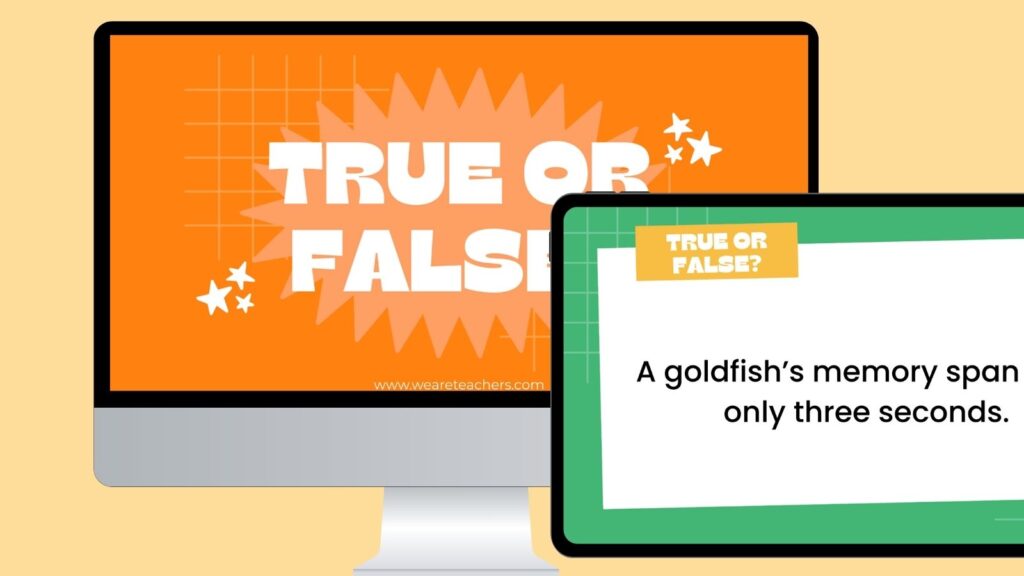
These examples demonstrate the clarity and simplicity that effective True or False questions should have. Well-constructed statements provide a single, unambiguous fact, allowing students to respond quickly and accurately. Such examples can be used to test basic knowledge in science, history, mathematics, or any subject area, making them versatile for assessments at all levels.

Conclusion
True or False questions are a widely used and effective tool in educational assessments, quizzes, and surveys due to their simplicity, efficiency, and ease of grading. They allow educators to evaluate a large amount of content in a short period and provide clear, objective results. However, despite their advantages, these questions have limitations, such as encouraging guessing and being less effective at assessing higher-order thinking skills.
To maximize their effectiveness, True or False questions must be carefully constructed: statements should be clear, concise, unambiguous, and focused on a single idea. Avoiding double negatives and absolute terms unless certain ensures that students’ responses accurately reflect their knowledge rather than their interpretation of confusing wording.
When designed thoughtfully, True or False questions can serve as a valuable component of a balanced assessment strategy, providing quick insights into learners’ understanding while complementing other question types that assess deeper reasoning and critical thinking.
FAQs
- What are True or False questions?
True or False questions are a type of objective assessment in which a statement is presented, and the respondent must determine whether it is true or false. They are widely used in exams, quizzes, and surveys for their simplicity and ease of grading. - What are the main advantages of True or False questions?
- They are easy to create and allow coverage of many topics in a short time.
- Grading is quick and objective, making them ideal for large classes or automated systems.
- They efficiently assess knowledge of basic facts and concepts.
- What are the main disadvantages of True or False questions?
- Respondents may guess answers, as there is a 50% chance of being correct by chance.
- They cannot effectively test deep understanding, reasoning, or problem-solving skills.
- Poorly worded or ambiguous statements can confuse respondents and reduce accuracy.
- How can I write effective True or False questions?
- Keep statements clear, concise, and focused on a single idea.
- Avoid double negatives and ambiguous language.
- Ensure statements are definitively true or false.
- Use absolute terms like “always” or “never” only when certain.
- Can True or False questions assess higher-order thinking?
Generally, they are best suited for testing factual knowledge and basic comprehension. While it is possible to design questions that require some reasoning, they are limited in assessing complex critical thinking or problem-solving skills compared to other formats like essay or scenario-based questions. - How should True or False questions be used in assessments?
They work best as part of a mixed assessment strategy, combined with multiple-choice, short-answer, or essay questions. This ensures both broad knowledge coverage and evaluation of higher-order cognitive skills. - Why is clarity so important in True or False questions?
Ambiguous wording, double meanings, or statements with multiple ideas can mislead respondents. Clear and precise statements ensure that answers reflect actual knowledge rather than interpretation or confusion.