Introduction
Can Turkeys Fly is one of the most recognizable birds in North America, often associated with Thanksgiving celebrations and festive meals. Their distinctive plumage, large size, and iconic fan-shaped tails make them easily identifiable, and their presence in cultural traditions has cemented them as a symbol of autumn and harvest. Despite their familiarity, many people are surprised to learn that turkeys are birds capable of flight—at least in certain conditions.
Most people naturally assume that turkeys are too large or heavy to fly, especially given the domesticated breeds commonly seen on farms and at holiday dinners. These farm-raised turkeys are selectively bred for size and meat production, making them significantly heavier than their wild counterparts. However, wild turkeys, which are native to North America, are much lighter and far more agile. These birds rely on short bursts of flight to escape predators, reach roosting sites, and navigate their natural environment.
Understanding whether turkeys can fly requires examining the differences between wild and domesticated turkeys, including their physical characteristics, body weight, wing structure, and natural behaviors. By exploring these aspects, we can uncover the surprising abilities of turkeys, separate fact from myth, and gain a greater appreciation for these remarkable birds.
Types of Turkeys
Not all turkeys are the same, and their ability to can turkeys fly largely depends on whether they are wild or domesticated. Understanding these differences is key to answering the common question: “Can turkeys fly?”
Wild Turkeys:
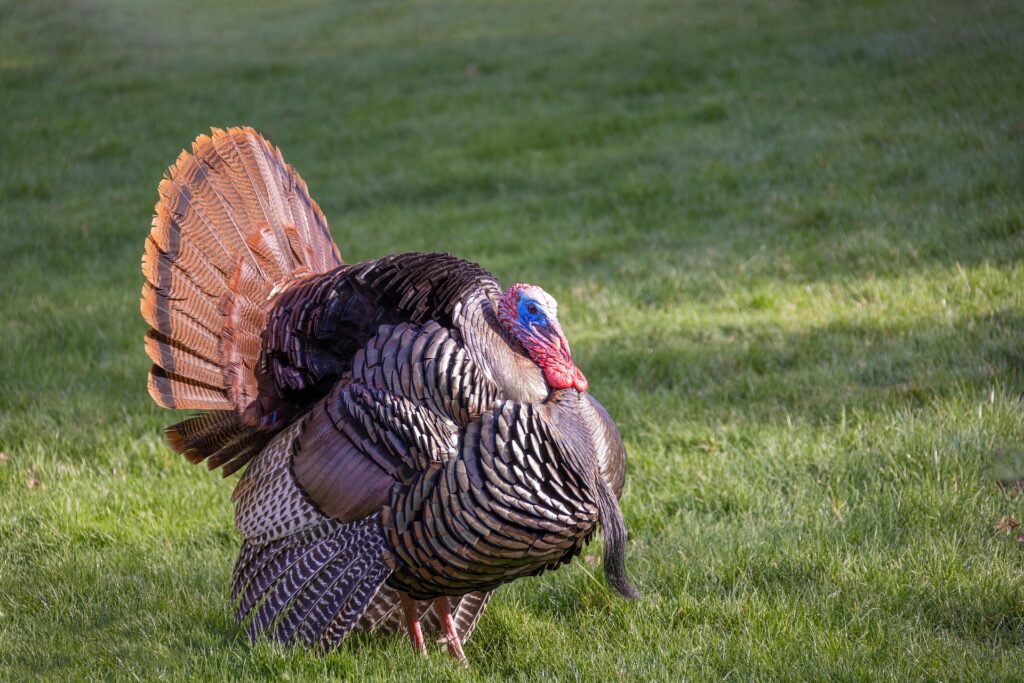
Wild turkeys are native to North America and are remarkable for their agility and speed. Typically weighing between 11 and 24 pounds, these birds are built for both ground movement and short bursts of flight. Their lighter bodies, strong wings, and sharp reflexes allow them to take off quickly when threatened. Wild turkeys often use flight as a survival tool—escaping predators, reaching high branches for roosting, and traveling efficiently between feeding areas. Despite their large size compared to many birds, wild turkeys are surprisingly nimble and capable of flying at speeds of up to 55 miles per hour for short distances.
Domesticated Turkeys:
Domesticated turkeys, on the other hand, have been bred primarily for meat production and large body size. These farm-raised birds often exceed 30 pounds, which makes sustained flight extremely difficult, if not impossible. Their heavier bodies and selective breeding for weight rather than agility mean that most domesticated turkeys cannot take off from the ground. While they may flap their wings or make small jumps, true flight is largely beyond their physical capabilities.
By examining the type of turkey, it becomes clear that flight is not a universal ability among all turkeys. The distinction between wild and domesticated birds is essential to understanding their behavior, physical abilities, and survival strategies.

Physical Abilities and Limitations
The ability of turkeys to can turkeys fly is determined by several physical factors, including body size, weight, wing structure, and flight style. While they are birds, their flight capabilities are quite different from those of smaller or more aerodynamically built birds.
Body Size and Weight:
One of the main factors limiting a turkey’s flight is its weight. Heavier bodies require more lift to become airborne, making sustained flight extremely difficult. Wild turkeys are relatively lighter, usually weighing between 11 and 24 pounds, which allows them to take off quickly and can turkeys fly short distances. In contrast, domesticated turkeys, bred for meat and larger size, can weigh over 30 pounds, making true flight nearly impossible.
Wing Structure:
Turkeys have strong, muscular wings relative to their body size, but their wings are adapted for short, rapid flights rather than long-distance soaring. Their wings provide enough power to lift them off the ground and maneuver through trees or escape danger, but they are not built for endurance. This design reflects their natural behavior as ground-dwelling birds that occasionally rely on flight for survival.
Flight Style:
Can turkeys fly in short bursts, using powerful flaps to propel themselves upward and forward. This burst flight is usually limited to a few hundred meters, enough to reach safety or a roosting spot. Wild turkeys can reach speeds of up to 55 miles per hour during these bursts, making them surprisingly fast despite their large size. Flight is mostly a defensive mechanism, allowing them to evade predators or gain a temporary vantage point rather than a primary mode of travel.
In summary, the physical abilities and limitations of turkeys—weight, wing structure, and flight style—determine how and when they use flight. While they are capable of impressive bursts of speed, sustained flight is reserved for much lighter and more agile birds.
Behavior Related to Flight
Flight in turkeys is not about long-distance travel like in migratory birds; rather, it serves specific behavioral and survival purposes. Understanding can turkeys fly provides insight into how these birds navigate their environment and protect themselves.
Escape from Predators:
One of the primary reasons turkeys take to the air is to evade danger. Wild turkeys face predators such as foxes, coyotes, and birds of prey. When threatened, a turkey will use a short burst of flight, often accompanied by loud wing flaps and evasive maneuvers, to put distance between itself and danger. This sudden, rapid flight is highly effective for survival, even if the turkey can only cover a few hundred meters.
Roosting:
Wild turkeys are ground-dwelling birds, but they seek safety at night by flying into trees. Roosting in trees protects them from nocturnal predators and harsh weather conditions. Flight allows them to reach elevated spots quickly and securely, highlighting how short bursts of flying are an essential part of their daily routine.
Mobility Between Feeding Areas:
While turkeys spend most of their time on the ground foraging for seeds, insects, and vegetation, flight aids in moving between feeding areas when necessary. For example, if food becomes scarce or a new feeding site is nearby but separated by obstacles such as fences or dense underbrush, a short flight can help turkeys navigate efficiently.
Summary:
Can turkeys fly primarily as a functional behavior, not for migration or recreation. Flight allows them to escape predators, reach safe roosting sites, and move efficiently across their territory. Even though these flights are brief, they are crucial for survival in the wild.
Myths and Misconceptions
Turkeys have long been the subject of myths and misunderstandings, especially regarding their ability to can turkeys fly. Many of these misconceptions arise from observations of domesticated turkeys, which differ significantly from their wild counterparts. Clarifying these myths helps provide a more accurate understanding of these fascinating birds.
Myth 1: “All turkeys are too heavy to fly.”
Many people assume that all turkeys are flightless because farm-raised turkeys, which are bred for meat and larger body size, cannot take off from the ground. Reality: Only domesticated turkeys are generally unable to can turkeys fly due to their heavier weight and selective breeding. Wild turkeys, in contrast, are lighter and much more agile, capable of short, rapid bursts of flight to escape predators or reach roosting sites.
Myth 2: “Turkeys can soar long distances like eagles.”
Some believe that turkeys, being birds, can glide or can turkeys fly long distances effortlessly. Reality: Turkeys are not built for sustained flight. Their flight is short and powerful, usually covering only a few hundred meters at a time. They rely on rapid flapping bursts rather than long, gliding flights, which is why they are often seen running on the ground rather than flying over long stretches.
Why These Myths Persist:
These misconceptions often come from casual observation or cultural depictions. Domesticated turkeys are common in farms and markets, and their inability to can turkeys fly gives the impression that no can turkeys fly. Additionally, popular media rarely portrays turkeys in flight, reinforcing these inaccurate beliefs.
By distinguishing between wild and domesticated turkeys and understanding their physical and behavioral traits, we can separate myth from reality and appreciate the impressive—but limited—flight capabilities of these birds.
Interesting Facts About Turkeys and Flight
Turkeys are remarkable birds with unique adaptations that allow them to survive in the wild, despite their large size. Their flight abilities, combined with other physical traits, make them versatile and resilient. Here are some interesting facts that highlight how turkeys navigate their environment:
1. Wild Turkeys Can Run Up to 25 Miles per Hour:
While flight is limited to short bursts, turkeys are exceptional runners. Wild turkeys can reach speeds of up to 25 miles per hour on the ground, allowing them to escape predators and cover ground efficiently. This running ability complements their flight, making them agile and hard to catch in the wild.
2. Domesticated Turkeys Can Still Flap Their Wings:
Even though farm-raised turkeys are generally too heavy to achieve true flight, they still use their wings to assist with balance and movement. Wing flapping helps domesticated turkeys maintain stability when running, maneuvering around obstacles, or engaging in courtship displays. This shows that wing strength remains important, even if flight is no longer a necessity.
3. Turkeys Use Both Flight and Running as Survival Strategies:
In the wild, turkeys combine flight and running to maximize their chances of survival. Flight is often reserved for immediate escape or reaching a safe roosting spot, while running helps them move stealthily or cover longer distances quickly. This dual strategy ensures that turkeys can respond effectively to threats in a variety of environments.
Additional Fun Fact:
can turkeys fly at speeds up to 55 miles per hour in short bursts, demonstrating the surprising power and agility of these seemingly bulky birds.
These facts underscore the adaptability of turkeys and reveal that, despite common misconceptions, they are well-equipped for survival through a combination of running and short-distance flight.
Conclusion
Turkeys are far more fascinating than many people realize. While commonly associated with Thanksgiving and farm life, their true abilities in the wild reveal a surprising level of agility and adaptability. Wild turkeys are capable of short bursts of flight, using their strong wings to escape predators, reach roosting sites, and navigate their environment efficiently. Domesticated turkeys, on the other hand, are generally too heavy tocan turkeys fly due to selective breeding, yet they retain wing movements that aid in balance and movement.
By examining the differences between wild and domesticated turkeys, as well as their physical abilities and behaviors, it becomes clear that flight in turkeys serves a functional purpose rather than long-distance travel. These birds rely on a combination of running and short flights as survival strategies, demonstrating both strength and adaptability.
Understanding the myths and realities of turkey flight helps clear up common misconceptions and highlights the fascinating biology of these iconic North American birds. In the end, turkeys are a perfect example of how evolution, environment, and human intervention shape the abilities and behaviors of animals in remarkable ways.
FAQs
1. Can turkeys fly?
No. Wild can turkeys fly short distances, while domesticated turkeys are generally too heavy to achieve true flight due to selective breeding.
2. How far can wild can turkeys fly?
Wild turkeys typically fly only a few hundred meters in short bursts, often at speeds up to 55 miles per hour.
3. Why can turkeys fly if they spend most of their time on the ground?
Flight helps turkeys escape predators, reach safe roosting spots in trees, and move between feeding areas efficiently.
4. Can domesticated turkeys flap their wings?
Yes. While they cannot achieve full flight, domesticated turkeys use wing flapping for balance, movement, and courtship displays.
5. Do turkeys migrate?
No. Turkeys are non-migratory birds, so their flight is limited to short bursts for survival purposes, not long-distance travel.
6. Are turkeys fast runners?
Yes. Wild turkeys can run up to 25 miles per hour, which, combined with short flights, helps them evade predators effectively.
7. Why do people think can turkeys fly?
This misconception mainly comes from observing heavier, domesticated turkeys, which are commonly seen on farms and in media, giving the impression that no can turkeys fly.