

Introduction
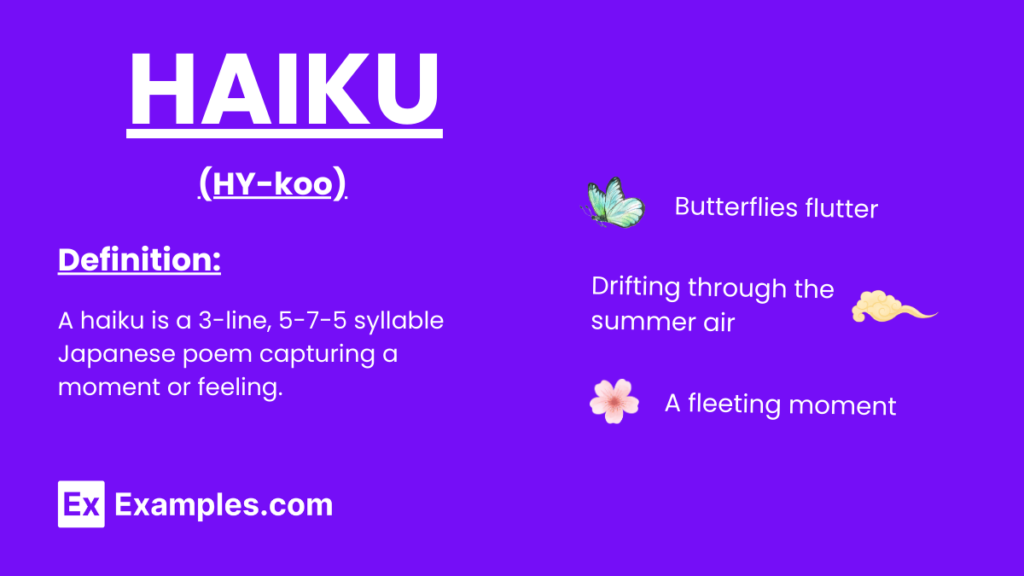
Haiku examples are a traditional Japanese poetic form renowned for its simplicity, brevity, and emotional depth. Unlike longer poems, which may explore complex narratives or extended imagery, a haiku captures a single moment, observation, or feeling in just three lines. Its structure is typically 5-7-5 syllables, a pattern that encourages precision in word choice and economy of expression.
The beauty of a haiku lies in its ability to evoke vivid imagery and deep reflection using very few words. Often, haikus focus on nature—such as seasonal changes, landscapes, or the behavior of animals—or on fleeting human experiences like a passing emotion, a memory, or a quiet moment of realization. This focus on a singular observation encourages readers to pause, reflect, and connect with the subtle details of life that might otherwise go unnoticed.
Traditionally, haikus incorporate a kigo (a seasonal reference) and sometimes a kireji (a “cutting word” that creates a pause or adds emphasis), which further enriches the imagery and emotional impact. Even in English adaptations, where these elements may be less rigidly observed, the essence remains: haikus distill complex feelings and scenes into a moment of clarity and resonance.
Despite their brevity, haikus have a timeless appeal, bridging cultures and languages. They offer an accessible entry point for budding poets while providing seasoned writers a powerful tool for expression. In essence, a haiku is a microcosm of observation and emotion—short in length but expansive in depth—capturing the beauty and impermanence of life in its purest form.
Structure of a Haiku
The structure of a haiku is one of its defining features, emphasizing brevity, rhythm, and precision. A classic haiku is made up of three lines that follow a 5-7-5 syllable structure:
- Line 1: 5 syllables
- Line 2: 7 syllables
- Line 3: 5 syllables
This rigid syllable framework encourages poets to choose words carefully, conveying imagery and emotion with a minimum of language. Every word in a haiku is essential; there is no room for unnecessary elaboration.
In traditional Japanese haiku, two additional elements often play a crucial role:
- Kigo (Seasonal Reference):
A kigo is a word or phrase that hints at a particular season, grounding the poem in the natural world and creating a connection between human experience and nature. For example, “cherry blossoms” might signal spring, while “falling leaves” indicates autumn. Seasonal references provide context and evoke imagery and emotion efficiently. - Kireji (Cutting Word):
The kireji is a word or punctuation mark that introduces a pause, emphasis, or shift in perspective. It can separate two contrasting images, highlight a moment of insight, or add rhythm to the poem. In English adaptations, the effect of a kireji is often achieved through punctuation, line breaks, or natural pauses.
In English-language haikus, while strict adherence to 5-7-5 syllables is sometimes relaxed, the essence remains the same: to capture a single vivid image or emotional moment. The structure serves as a canvas for reflection, observation, and subtle beauty, allowing even the briefest poem to convey profound meaning.
Types of Haiku
Haikus, while unified by their concise structure and focus on imagery, can take various forms depending on subject matter, style, and intention. Understanding the different types of haiku helps both writers and readers appreciate the diversity and creative possibilities of this poetic form.
1. Traditional Nature Haiku
The most classic form of haiku centers on nature and seasonal themes. These poems often incorporate a kigo (seasonal reference) and evoke imagery related to landscapes, weather, plants, or animals. Traditional nature haikus aim to capture a fleeting moment in the natural world, highlighting its beauty, impermanence, and emotional resonance. For example, observing falling autumn leaves or a quiet snowfall can serve as the foundation for a reflective, tranquil haiku. This type emphasizes simplicity, clarity, and a deep connection to the natural environment.
2. Modern/Free-form Haiku
Modern or free-form haikus expand the traditional boundaries of the form. While they typically maintain brevity and focus on vivid imagery, they may explore urban life, personal experiences, or abstract ideas rather than strictly adhering to seasonal themes. These haikus allow for greater creative freedom, enabling poets to address contemporary topics, social commentary, or emotional reflections. Modern haikus often experiment with language, structure, or line breaks while preserving the core essence of immediacy and insight.
3. Humorous or Playful Haiku
Some haikus are designed to entertain, amuse, or surprise. Humorous or playful haikus often use clever wordplay, irony, or unexpected twists to engage readers. While still adhering to the haiku’s concise three-line format, these poems focus on delight rather than profound reflection, making them accessible and enjoyable for a wide audience. For instance, a playful haiku about a mischievous pet or an everyday quirk can capture a relatable moment in a lighthearted, witty way.
By exploring these types, writers can choose the style that best suits their intended message, audience, and emotional tone. Whether capturing the serene beauty of nature, the pulse of modern life, or a moment of humor, haikus offer endless possibilities for creative expression.
Examples of Haiku
Providing examples of haikus helps illustrate how this concise poetic form can capture imagery, emotion, and moments of reflection across different themes and styles. Here are several types of haikus with illustrative examples:
1. Nature Haiku
Nature haikus focus on the beauty, impermanence, and subtle details of the natural world. They often include a seasonal reference and aim to evoke a sensory experience.
Example:
Autumn leaves falling,
Whispering in the cool wind,
Silence fills the air.
This haiku captures the quiet, reflective mood of autumn, emphasizing both movement and stillness in nature.
2. Seasonal Haiku
Seasonal haikus explicitly reference a particular time of year, drawing attention to its unique sights, sounds, and feelings.
Example:
Winter snow descends,
Blanketing the sleeping earth,
Footprints mark the path.
This haiku evokes the quiet, serene atmosphere of winter while highlighting a small human interaction with the scene.
3. Modern Haiku
Modern or free-form haikus often depict contemporary life or urban experiences. They maintain the essence of the haiku—brevity, imagery, and reflection—while exploring modern themes.
Example:
City lights sparkle,
Neon rivers flow at night,
Dreams drift on the streets.
Here, the haiku captures the vibrancy of city life and the transient, dreamlike quality of urban nights.
4. Humorous Haiku
Humorous or playful haikus use wit, irony, or everyday quirks to engage readers in a lighthearted way.
Example:
Alarm clock screaming,
Coffee saves my sleepy brain,
Monday morning blues.
This haiku humorously conveys a relatable morning struggle, showing that even mundane experiences can inspire poetic expression.
By examining these examples, readers can see how haikus adapt to different subjects and moods while remaining concise and impactful. Each haiku demonstrates the power of brevity and imagery, whether evoking natural beauty, modern life, or humor.
Benefits of Writing Haiku
Writing haikus offers numerous benefits that extend beyond the act of creating poetry. The concise, focused structure of haikus encourages skill development, mindfulness, and creative thinking, making them a valuable exercise for both students and adults.
1. Encourages Concise Expression and Clarity
Because haikus are limited to just three lines and a 5-7-5 syllable pattern, writers must choose words carefully and convey meaning efficiently. This practice enhances clarity of thought and expression, teaching poets to communicate ideas with precision and impact.
2. Enhances Observation Skills
Haikus often focus on small, fleeting moments or subtle details, whether in nature or everyday life. Writing them encourages writers to observe their surroundings more closely, noticing sights, sounds, and emotions that might otherwise go unnoticed. This heightened awareness helps develop mindfulness and attention to detail.
3. Stimulates Creativity and Imagination
Haikus provide a framework for creative exploration, challenging writers to express complex feelings or vivid imagery in very few words. This constraint stimulates imaginative thinking, prompting writers to find unique ways to depict experiences, emotions, and ideas.
4. Provides a Mindful, Reflective Activity
Composing haikus encourages reflection and calm focus. The practice of observing, condensing, and crafting a brief yet meaningful poem can be meditative, promoting relaxation and mental clarity. Writing haikus becomes an opportunity to pause, appreciate small moments, and connect with one’s thoughts and surroundings.
Overall, writing haikus is not only a literary exercise but also a tool for personal growth, creativity, and mindfulness. Through their simplicity, haikus help writers develop essential skills while encouraging reflection and appreciation for life’s fleeting moments.
Tips for Writing Your Own Haiku
Writing haikus can be both enjoyable and challenging, as it requires capturing vivid imagery and emotion in just three short lines. The following tips help writers craft meaningful and effective haikus, whether following traditional Japanese forms or experimenting with modern adaptations.
1. Observe the World Carefully—Small Details Matter
Haikus thrive on keen observation. Pay attention to subtle aspects of nature, daily life, or human behavior. Small moments—like the rustle of leaves, a fleeting glance, or the pattern of raindrops—can serve as the foundation for a powerful haiku. The ability to notice and appreciate these details is essential to creating vivid imagery.
2. Stick to the 5-7-5 Syllable Structure, but Focus on Imagery Over Rigid Rules
While the traditional haiku follows a 5-7-5 syllable pattern, the primary goal is clarity and impact. Don’t let counting syllables overshadow the poem’s imagery or emotional resonance. In English haikus, flexibility is often acceptable if it allows the poet to convey the essence of the moment more naturally.
3. Evoke Emotion or Reflection with Few Words
Haikus are not just descriptive—they are meant to resonate emotionally. Use precise, evocative words to create feelings of calm, wonder, humor, or introspection. Even a single word can carry significant weight, so select terms that enrich the reader’s experience and provoke thought.
4. Use Nature or Seasonal References if Following Traditional Styles
For traditional haikus, including a seasonal reference (kigo) can anchor the poem and evoke a connection to the natural world. References to spring blossoms, autumn leaves, or winter snow help create context, mood, and imagery that align with classical haiku aesthetics.
5. Experiment with Modern Topics to Make Haiku examples Relatable
Haikus do not have to be limited to nature or seasons. Modern Haiku examples can explore urban life, personal experiences, emotions, or social observations. Experimenting with contemporary topics keeps the form fresh and relatable, showing that haikus can adapt to today’s world while maintaining their brevity and impact.
By following these tips, writers can craft Haiku examples that are observant, evocative, and memorable, capturing small yet meaningful moments with precision and creativity. The practice not only improves poetic skill but also fosters mindfulness, imagination, and emotional awareness.

Conclusion
Haiku examples are a unique and timeless form of poetry that demonstrate how brevity can convey depth, emotion, and imagery. Despite their concise three-line structure, haikus have the power to capture fleeting moments, evoke profound feelings, and illuminate the beauty of both nature and everyday life.
By focusing on observation, precise word choice, and emotional resonance, Haiku examples encourage writers to see the world more attentively and express themselves with clarity. Whether adhering to traditional seasonal themes or exploring modern topics, Haiku examples provide a versatile and accessible medium for creative expression.
Writing haikus also promotes mindfulness, reflection, and creativity, helping writers slow down and appreciate subtle details often overlooked in daily life. For readers, Haiku examples offer moments of quiet reflection, insight, and emotional connection, making them a rewarding literary experience.
In essence, Haiku examples exemplify the art of saying more with less. They remind us that even the shortest poem can leave a lasting impression, capturing the transient beauty of life and the richness of human perception in a mere three lines.
FAQs
1. What is a Haiku examples?
A Haiku examples is a traditional Japanese form of poetry consisting of three lines that capture a moment, feeling, or observation. It typically follows a 5-7-5 syllable pattern and often focuses on nature, seasons, or fleeting experiences.
2. What are the main features of a Haiku examples?
Haikus are known for:
- Conciseness (only three lines)
- Vivid imagery and emotion
- Seasonal references (kigo) in traditional Haiku examples
- Pauses or emphasis (kireji) in Japanese Haiku examples, often represented by punctuation in English
3. Can Haiku examples be about modern topics, or only nature?
While traditional haikus focus on nature and seasons, modern Haiku examples can explore urban life, personal experiences, abstract ideas, or humor. The key is to capture a moment vividly and concisely.
4. Do Haiku examples have to strictly follow the 5-7-5 syllable structure in English?
Not always. While the 5-7-5 pattern is traditional, English Haiku examples often prioritize imagery and emotional impact over strict syllable count. Flexibility is allowed as long as the poem remains concise and evocative.
5. What is a kigo?
A kigo is a seasonal reference used in traditional Haiku examples to indicate the time of year and evoke imagery connected to nature. Examples include cherry blossoms for spring or falling leaves for autumn.
6. What is a kireji?
A kireji, meaning ‘cutting word,’ is used in Japanese Haiku examples to create a pause, emphasize a point, or highlight contrasting images. In English adaptations, line breaks, punctuation, or rhythm often achieve a similar effect.
7. How can writing Haiku examples benefit me?
Writing Haiku examples helps develop:
- Observation skills by focusing on small, meaningful details
- Concise and clear expression
- Creativity and imagination
- Mindfulness and reflection, promoting calm and focus
8. Are Haiku examples suitable for beginners?
Yes. Haiku examples are accessible for beginners because of their short length, but they also challenge writers to think creatively and express meaning efficiently, making them valuable for both novice and experienced poets.


